
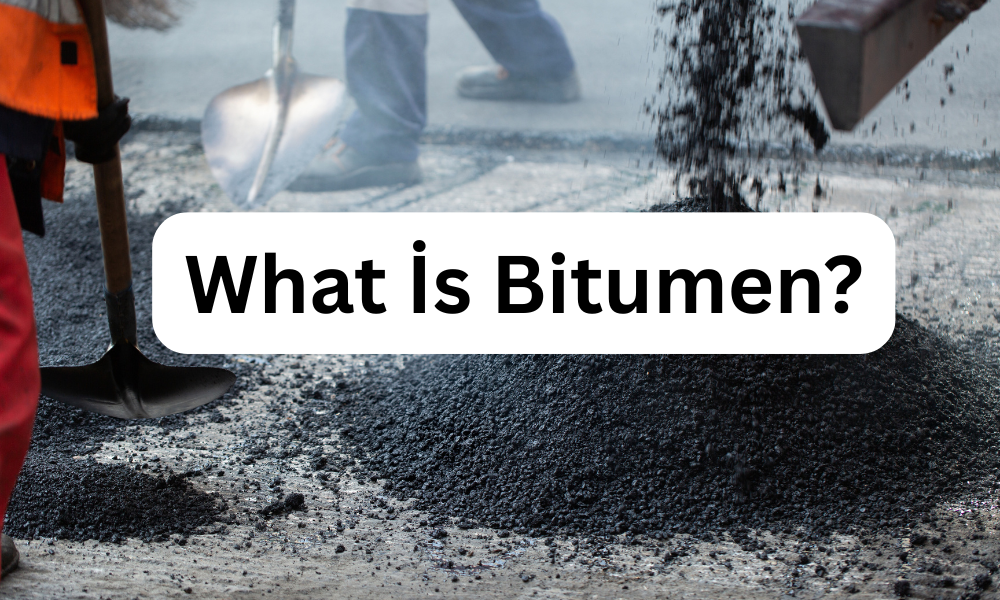
Bitumen — often called asphalt binder or simply asphalt in some regions — is a highly viscous, black–brown hydrocarbon produced by distilling crude oil. In road construction, roofing, and countless waterproofing applications, bitumen acts as the sticky, elastic glue that binds mineral aggregates together, giving pavements their durability and flexibility under traffic and climate stresses. Because it is thermoplastic, bitumen softens when heated and hardens when cooled, allowing contractors to pump, spread, and compact it efficiently on-site. To learn more about practical applications, check out how to use bitumen.

Contents
What Are the Different Types of Bitumen?
In everyday engineering practice, bitumen is classified by processing method and performance grade. Processing divides products into paving‑grade, oxidized, cutback, and polymer‑modified families, while performance grades (e.g., PG 64‑22) tell engineers how each blend will behave under a specific temperature range. Selecting the right type is crucial to meeting service‑life targets, controlling maintenance costs, and reducing premature failures such as rutting or thermal cracking.
What Are the Three Types of Bitumen?
In many civil‑engineering textbooks, the “three types” shorthand refers to:
- Paving‑grade (asphalt) bitumen for roads
- Oxidized bitumen for roofs and industrial protection
- Cutback or emulsified bitumen for surface treatments and maintenance
Polymer‑modified grades are often treated as a performance enhancement rather than a standalone category, although modern specifications increasingly list them separately.
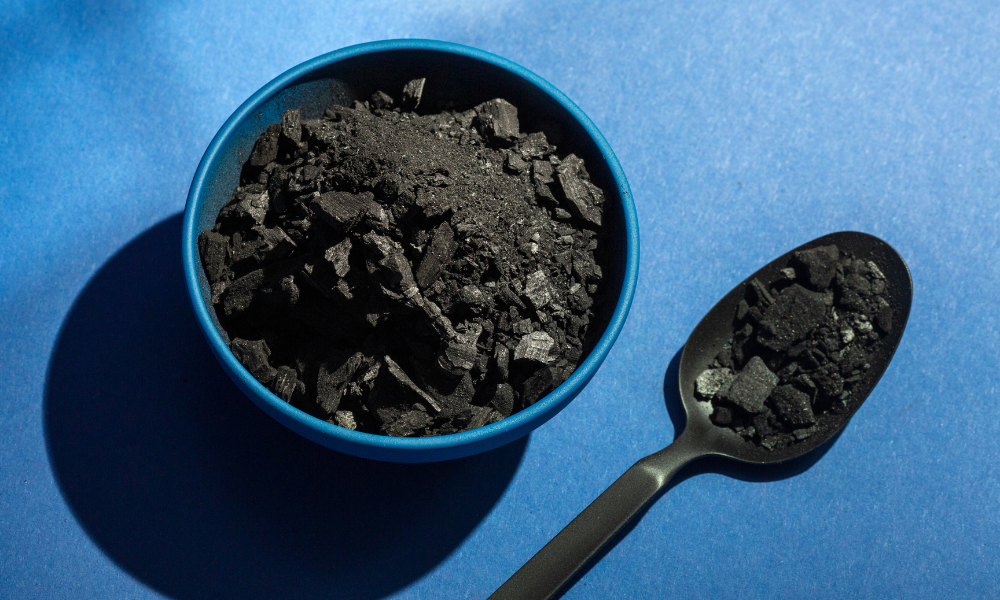
Asphalt Bitumen
Asphalt bitumen (also called paving‑grade bitumen) is the material you see steam‑rolled onto highways and airport runways. Produced by straightforward vacuum distillation and sometimes mild air blowing, it offers a balance of penetration (softness) and viscosity suitable for hot‑mix asphalt. Common penetration grades include 50/70 or 70/100, indicating how deep a standard needle sinks into the binder under test conditions. Contractors choose a grade that matches local climate—softer for cold regions, stiffer for hot.
Oxidized Bitumen
Oxidized bitumen (blown bitumen) is manufactured by bubbling air through hot penetration‑grade bitumen. Oxidation raises softening point, lowers penetration, and introduces a more “elastic‑plastic” behavior. The result is a hard, high‑temperature‑resistant binder ideal for roofing felts, pipe coatings, and corrosion‑protection membranes. Industrial labels such as 85/25 or 90/40 express softening point (°C) over penetration (dmm), helping buyers match product to application.
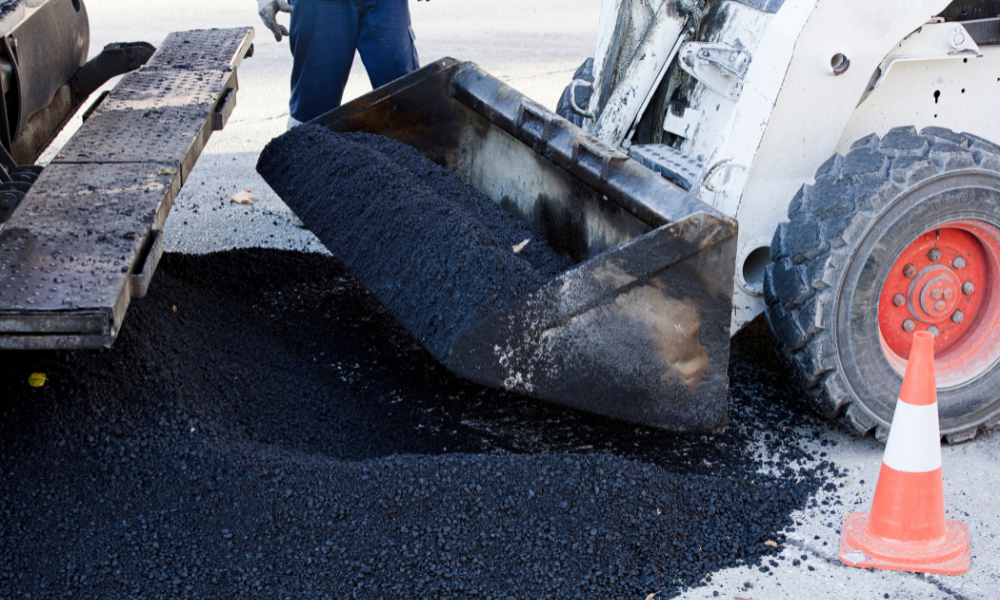
Cutback Bitumen
When immediate cold‑weather or remote‑area work calls for a low‑viscosity binder, refiners add volatile solvents (kerosene, naphtha) to create cutback bitumen. The thinner liquid can be sprayed at ambient temperatures, then gradually “sets” as the solvent evaporates. Grades—rapid, medium, and slow curing—depend on solvent volatility. Environmental regulations now restrict cutbacks because solvent vapors are flammable and contribute to VOC emissions.
Polymer Modified Bitumen
Adding styrene‑butadiene‑styrene (SBS), ethylene‑vinyl‑acetate (EVA), crumb rubber, or other polymers yields polymer modified bitumen (PMB). These engineered binders offer superior elasticity, adhesion, and fatigue resistance, extending pavement life by 30–50 %. PMB is also chosen for bridge decks, racetracks, and heavy‑duty container terminals where extreme loads or temperature swings would degrade conventional asphalt too quickly.
| Property | Asphalt Bitumen | Oxidized Bitumen | Cutback Bitumen | Polymer Modified Bitumen |
|---|---|---|---|---|
| Viscosity at Application | High (needs heating) | Very high | Low (solvent‑reduced) | Tunable, medium‑high |
| Main Additive / Process | Vacuum distillation | Air blowing | Volatile solvent | SBS, EVA, crumb rubber |
| Typical Uses | Hot‑mix pavements | Roofing, pipe coatings | Spray seals, cold patch | Heavy‑duty pavements, bridges |
| Environmental Impact | Moderate | Low VOC | High VOC | Depends on polymer source |
| Key Advantage | Cost‑effective, familiar | High temp resistance | Easy cold application | Superior durability & flexibility |
What Can Bitumen Be Used For?
Beyond highways, bitumen’s waterproofing and adhesive properties power a wide portfolio of products:
- Roofing membranes & shingles – sealing out rain and UV radiation
- Damp‑proof courses – blocking ground moisture in building foundations
- Protective pipe coatings – safeguarding steel pipelines against corrosion
- Soundproofing & vibration damping mats – reducing noise in vehicles and machinery
- Industrial flooring & sports tracks – offering impact resistance and skid control
- Printing inks & paint binders – delivering dark pigments and gloss control
Thanks to continuous R&D, nano‑modified and bio‑based bitumen alternatives are also emerging in advanced composites and 3‑D printing filaments.
What Does Bitumen Look Like?
Freshly manufactured bitumen appears as a shiny, jet-black liquid at mixing temperatures (140–180 °C) and cools to a dark, glassy solid with a semi-elastic surface. Under sunlight, aged road surfaces may fade to deep brown or gray as oxidization and dust dull the binder film. In sheet form (roofing rolls), oxidized bitumen exhibits a matte, charcoal finish and a faintly mineral smell. To learn why this material is so widely applied in construction, see the Main Purpose of Bitumen which highlights its role as a durable binder and waterproofing agent.
What is Bitumen Made From?
Bitumen originates from the heaviest fractions of crude oil—high‑molecular‑weight asphaltenes, resins, and aromatic hydrocarbons left after lighter fuels (gasoline, diesel, kerosene) are distilled off. Vacuum distillation and subsequent air blowing rearrange these molecules into a viscoelastic matrix rich in carbon (~80 %), hydrogen (~10 %), and trace heteroatoms (oxygen, sulfur, nitrogen, metals). Though fossil‑based, ongoing research investigates partially renewable feedstocks such as lignin and algae oils to cut bitumen’s carbon footprint.
We have learned what is bitumen and where it is used. Now, please send us your comments on this topic or ask any questions you may have.
Frequently Asked Questions About Bitumen
Is Bitumen a Tar?
No. Tar is produced from coal or wood pyrolysis, while bitumen comes from petroleum.
Why is Bitumen Not Used?
In some projects it is replaced by concrete or synthetic membranes when higher chemical resistance or lower maintenance is required.
Is Bitumen good or bad?
It is highly effective for infrastructure but poses environmental concerns during production and disposal.
Is Bitumen Toxic to Humans?
Fumes can irritate lungs during hot application; proper PPE and ventilation mitigate risk.
Does Bitumen Preserve Wood?
Yes, bitumen coatings can protect wooden piles from moisture and decay.
Does Bitumen React with Water?
Bitumen itself is hydrophobic, but trapped moisture can cause stripping in asphalt mixtures if not properly designed.

Leave a Reply