
Contents
- 1 The Strategic Awakening of Global Mining and Quarrying
- 2 The Construction Sector’s Hidden Vulnerability: Bulk Materials
- 3 The Energy Transition is Fundamentally a “Materials Transition”
- 4 Raw Materials: The New Geopolitical Weapon
- 5 National Ambitions vs. The Reality of Mining Permits and Local Pushback
- 6 Supply Chain Security: The New Mandate for Investors
- 7 The Dangerous Gap Between Infrastructure Vision and Material Reality
- 8 China, Processing Power, and the Reality of Global Dependency
The Strategic Awakening of Global Mining and Quarrying
For decades, mining and quarrying operated in the shadows—viewed as legacy industries quietly supplying the raw materials for global urbanization and cheap consumer goods. The world took the seamless extraction and delivery of these resources for granted. That era is officially over.
Today, governments, defense planners, and corporate boardrooms are waking up to a harsh reality: minerals and construction materials are critical strategic assets. The focus has shifted from simple demand growth to securing supply chains, ensuring national resilience, and protecting against global disruptions.
This isn’t just about high-profile metals like lithium, rare earths, or copper for the energy transition. Everyday aggregates—sand, crushed stone, cement feedstocks, and industrial minerals—are now recognized as pillars of national security, essential for building roads, ports, flood defenses, and massive infrastructure projects.
Demand has become politically non-negotiable. Modern decarbonization goals and supply chain “friend-shoring” rely heavily on massive, reliable volumes of raw materials. Policies like the EU’s Critical Raw Materials Act highlight a major shift: governments are actively intervening because market forces alone can no longer guarantee the inputs needed for future economies.
This long-term strategic reset forces construction leaders, investors, and policymakers to face tough realities: Where will the materials for the next decade come from? Who absorbs the permitting risks? And how do massive infrastructure ambitions survive local opposition?
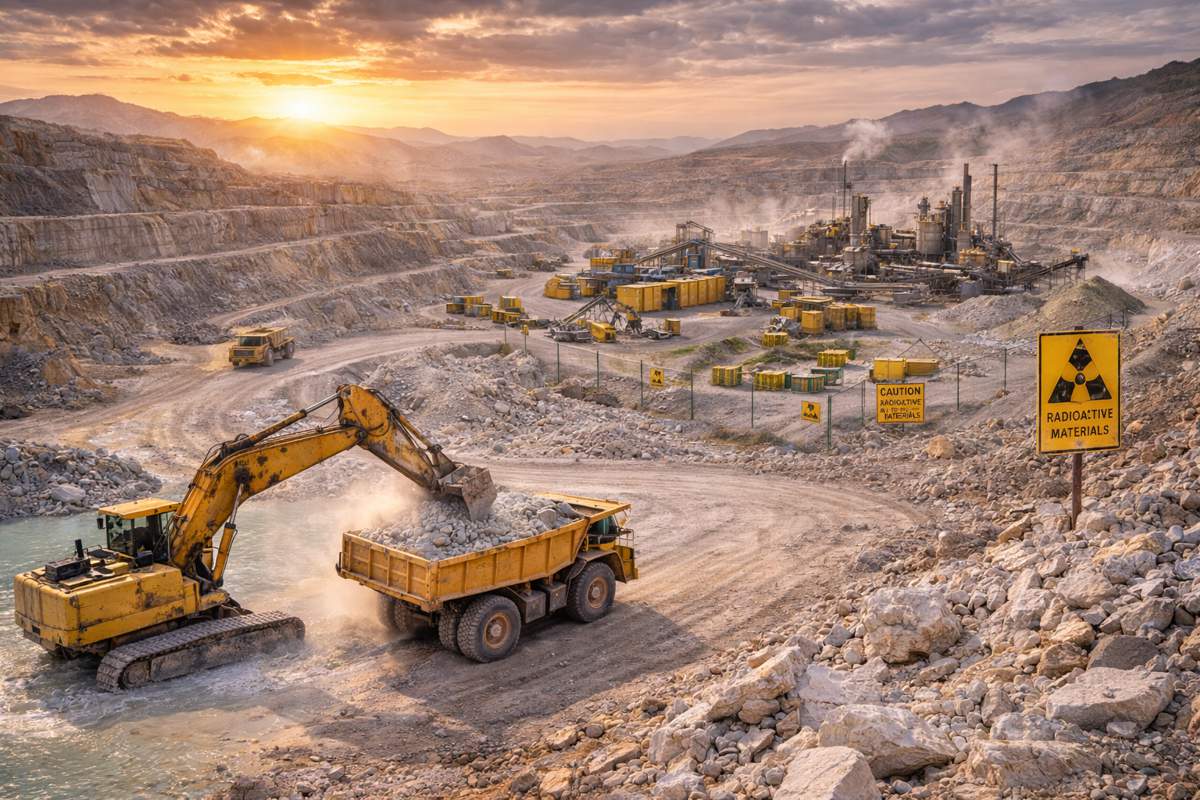
Strategic Minerals: The New Currency of National Power
A nation’s economic dominance has always been tied to its access to raw materials. However, the sheer volume of industries now reliant on mineral supply has elevated these resources from mere commodities to critical pillars of national security and global competitiveness.
Beyond Defense: A Broadening Landscape
Historically, “strategic minerals” were confined to military supply chains or niche manufacturing. Today, that definition has expanded aggressively. Clean energy systems, EVs, digital infrastructure, and semiconductors all depend entirely on mineral inputs that are geographically concentrated and highly susceptible to geopolitical friction.
Systemic Constraints and The IEA Warning
The International Energy Agency (IEA) highlights that this isn’t a temporary spike; it’s massive industrial demand driven by government electrification policies and private capital. With lithium demand jumping by 30% and other critical minerals like nickel, cobalt, and graphite rising by 8-10%, global supply chains are compressing. When multiple mega-industries compete for the exact same materials, supply constraints become systemic.
Minerals as Geopolitical Leverage
Put simply: minerals are the new infrastructure. Without them, no other modern infrastructure can be built.
The concentration of raw material processing creates immense geopolitical leverage, turning supply chains into economic pressure points. Initiatives like the EU’s Critical Raw Materials (CRM) Act prove that governments are actively stepping in to secure domestic extraction, processing, and recycling. Fast-tracked permitting timelines signal a harsh realization: free trade is no longer guaranteed, and old bureaucratic processes cannot keep up with modern industrial urgency.
The Double-Edged Sword for the Mining Sector
For mining companies, this era offers massive opportunities backed by government-signaled demand certainty. However, it also brings intense scrutiny. Operating as a “strategic industry” means facing heavy public oversight, shifting national expectations, and elevated political risk.
The Construction Sector’s Hidden Vulnerability: Bulk Materials
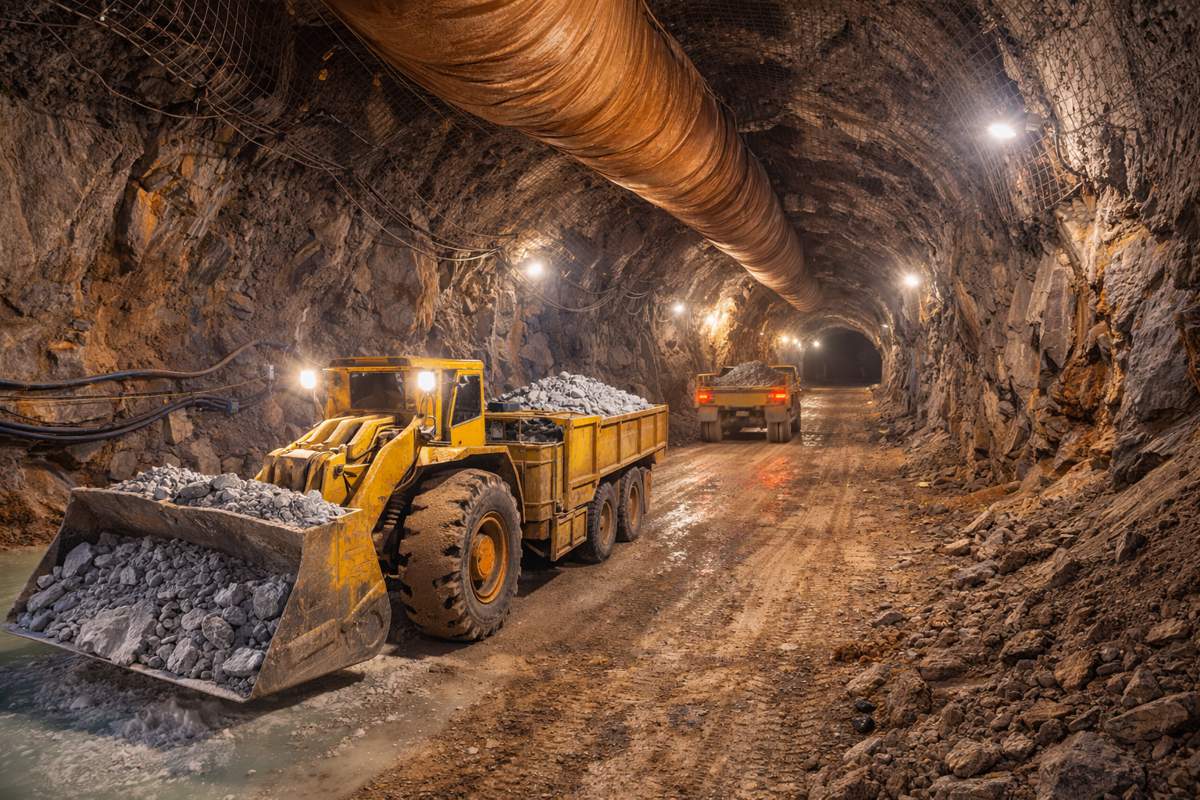
While critical minerals steal the geopolitical spotlight, the construction economy relies on something much more foundational: bulk materials. The modern built environment is a massive conversion engine, transforming aggregates, cement, asphalt, and steel into functional infrastructure. Yet, aggregates—the literal cornerstone of this chain—remain strategically ignored.
Scale Equals Strategic Value
Because aggregates like sand, gravel, and crushed stone are typically mined locally, they rarely receive “strategic” national status in policy debates. However, the sheer volume required for mega-infrastructure projects makes them critical by default.
USGS data highlights this reality: in the US, 42% of construction sand and gravel goes directly into concrete, while another 20% forms road bases. These unglamorous materials dictate the physical reality of our economy and enable every other strategic ambition to exist.
The Real Bottlenecks: Bureaucracy, Not Geology
When governments announce kilometers of new roads, modernized rail networks, or expanded ports, they are essentially ordering billions of tonnes of raw rock and sand. The primary bottleneck for these materials isn’t geological scarcity; it’s logistical and bureaucratic.
Strict permitting processes, land-use constraints, and fierce local opposition make opening or expanding quarries incredibly difficult. Society demands infrastructure upgrades but aggressively opposes the local extraction required to build them.
The Logistics Trap
The economics of aggregates are brutal: they are high-volume, low-margin materials. Transporting heavy rock over long distances quickly destroys project budgets.
When local quarries face closure or expansion blocks, the consequences are immediate and severe. Construction costs soar, schedules face massive delays, and governments are forced to choose between relaxing environmental regulations, importing expensive materials, or scaling down their infrastructure ambitions entirely.
Ultimately, the strategic conversation must expand beyond global battery supply chains. The immediate question is whether massive national infrastructure goals can actually survive restrictive local planning frameworks.
The Energy Transition is Fundamentally a “Materials Transition”
Global decarbonization goals require an infrastructure mobilization on a scale usually reserved for wartime. Renewable energy plants, power grids, charging networks, and battery production facilities all demand massive volumes of mineral-intensive materials.
The 3-Billion-Ton Decarbonization Bill
The World Bank makes this reality painfully clear: deploying the wind, solar, and energy storage systems needed to keep global warming below 2°C will require over 3 billion tons of minerals and metals (such as lithium, graphite, and cobalt). This colossal figure is the ultimate proof that the energy transition cannot be achieved through desk-bound policies alone. Without extraction, processing, and logistical capacity, climate targets are just a spreadsheet exercise.
The Backbone of Electrification: Copper and Critical Metals
Projections from the International Energy Agency (IEA) show that copper has indisputably become the backbone of the modern economy. By 2040, the demand for copper, nickel, lithium, and rare earth elements is expected to multiply exponentially. Investors have long understood copper’s industrial weight, but what has changed is the unprecedented, policy-driven surge in demand.
The Clash Between Political Goals and Industrial Realities
The biggest bottleneck here is timing. Governments can announce massive green energy packages overnight, but bringing a new mine into production takes years of permitting, financing, and infrastructure development. This timeline mismatch is exactly why mining is no longer just a raw material export industry—it has become a matter of national security and strategic priority.
The Reality We Must Face
It is inevitable, and often justified, that mining projects face local pushback over environmental impacts and land use. However, if societies truly want a low-carbon, electrified future, they must confront the material costs of building it.
Simply put: the energy transition is not just a technological revolution. It is, in every sense, a materials transition, and the mining sector holds the upstream key.
Raw Materials: The New Geopolitical Weapon
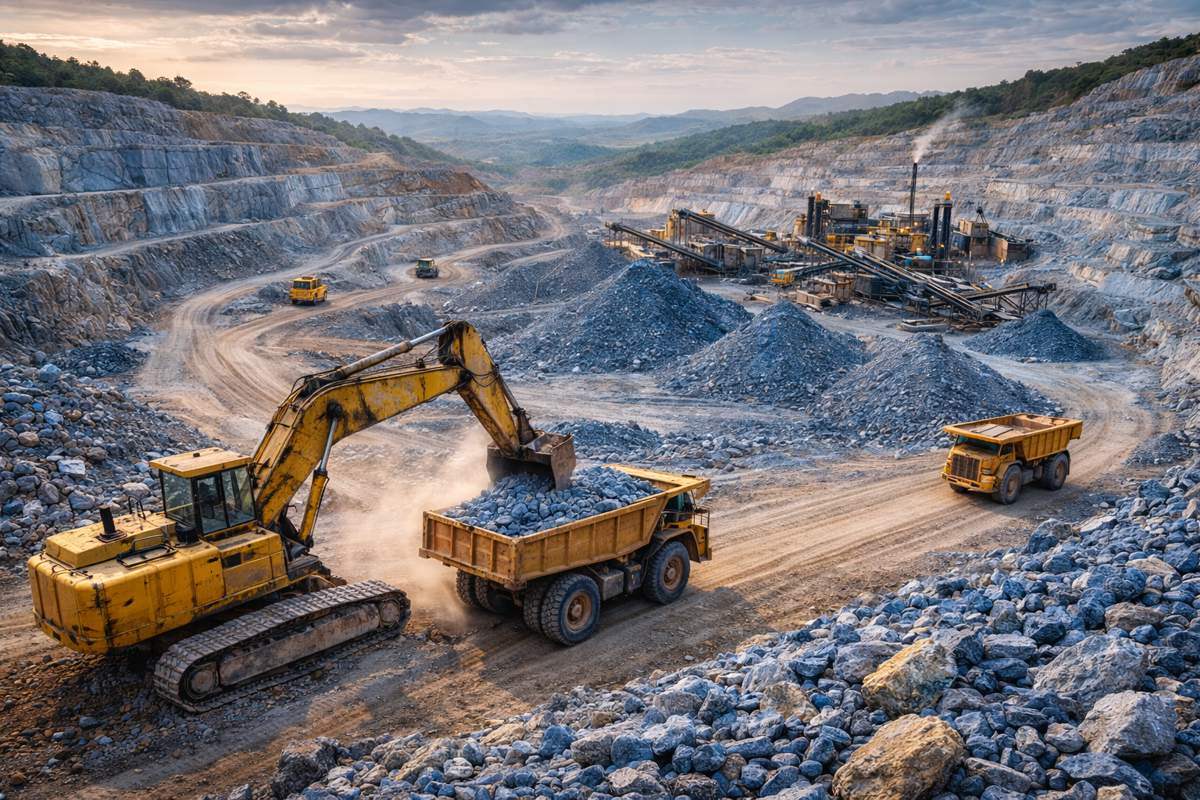
The modern global economy was built on seamless trade, prioritizing cost efficiency above all else. That illusion has shattered. Today, geopolitical tensions are forcing governments to prioritize supply chain resilience over pure efficiency, directly impacting the mining and construction sectors.
The End of the “Lowest-Cost” Era
For decades, materials flowed freely from the cheapest producers. However, pandemic disruptions, trade wars, and energy crises have proven that global logistics are highly vulnerable to political weaponization. Policymakers have realized that commodity markets cannot be shielded from geopolitical fallout.
Self-Sufficiency as National Security
Terms like “de-risking” and “diversification” are simply polite ways of demanding self-sufficiency. The EU’s Critical Raw Materials Act is a prime example, explicitly linking mineral access to Europe’s climate goals and strategic defense. The political message is undeniable: dependency on foreign supply chains is now classified as an unacceptable risk. The Ripple Effect on Infrastructure and Construction
This geopolitical pivot severely disrupts the construction sector in three key ways:
-
Tech & Machinery Bottlenecks: Shortages in critical minerals directly threaten the production of electric construction machinery batteries and digital automation tools.
-
Core Material Volatility: Energy price spikes cause massive price fluctuations in foundational materials like steel, cement, and bitumen.
-
Protectionist Policies: Governments increasingly demand that infrastructure projects boost domestic manufacturing, enforcing strict local content rules.
The New Reality for Developers
For contractors and developers, the procurement landscape has permanently changed. Financing now comes with strategic strings attached, and domestic extraction incentives are paired with high regulatory risks.
Ultimately, mineral supply is no longer just a commercial procurement issue—it is a matter of high-stakes diplomacy and national security.
National Ambitions vs. The Reality of Mining Permits and Local Pushback
The renewed strategic importance of mining has sparked a unified political cry: extract locally, process domestically, and fast-track approvals. While this sounds like common sense on paper, reality is a bureaucratic and social minefield.
The Illusion of Easy Domestic Extraction
Opening or expanding a quarry isn’t just limited by geology. In developed economies, it is strangled by land-use laws, environmental red tape, labor shortages, and fierce community opposition. This creates a massive strategic collision: communities demand modern infrastructure but actively protest the quarries operating near their homes. Similarly, environmental groups champion the shift to renewable energy but fiercely fight the new mines required to build the very hardware that makes the green transition possible.
Recycling Is Not a Magic Bullet
Policies like the EU’s CRM Act attempt to balance this by pushing for sustainability, recycling, and circular supply chains. However, recycling cannot scale fast enough to solve the immediate crisis. Critical minerals are currently locked inside long-lifecycle products like EVs and power grids. It will take decades before recycling volumes can meaningfully offset the need for raw, newly mined materials.
The Fallout for the Construction Sector
The world desperately needs new material supplies, but extracting them remains politically toxic. For construction professionals, this creates a permanent state of materials risk. Project feasibility is no longer just about budget inflation; it is about actual physical availability. This unpredictable supply chain will force sweeping changes across the industry:
-
Contract Structures: Risk-sharing models and procurement strategies will need complete overhauls to account for supply delays.
-
Flexible Design: Architects and engineers will need to design with substitutions in mind based on real-time material availability.
-
Tech Integration: Data-driven planning, BIM (Building Information Modeling), and digital construction tools will transition from optional upgrades to absolute necessities.
Mining and quarrying have regained their strategic crown for one simple reason: they are the unavoidable upstream gatekeepers of the entire physical economy.
Supply Chain Security: The New Mandate for Investors
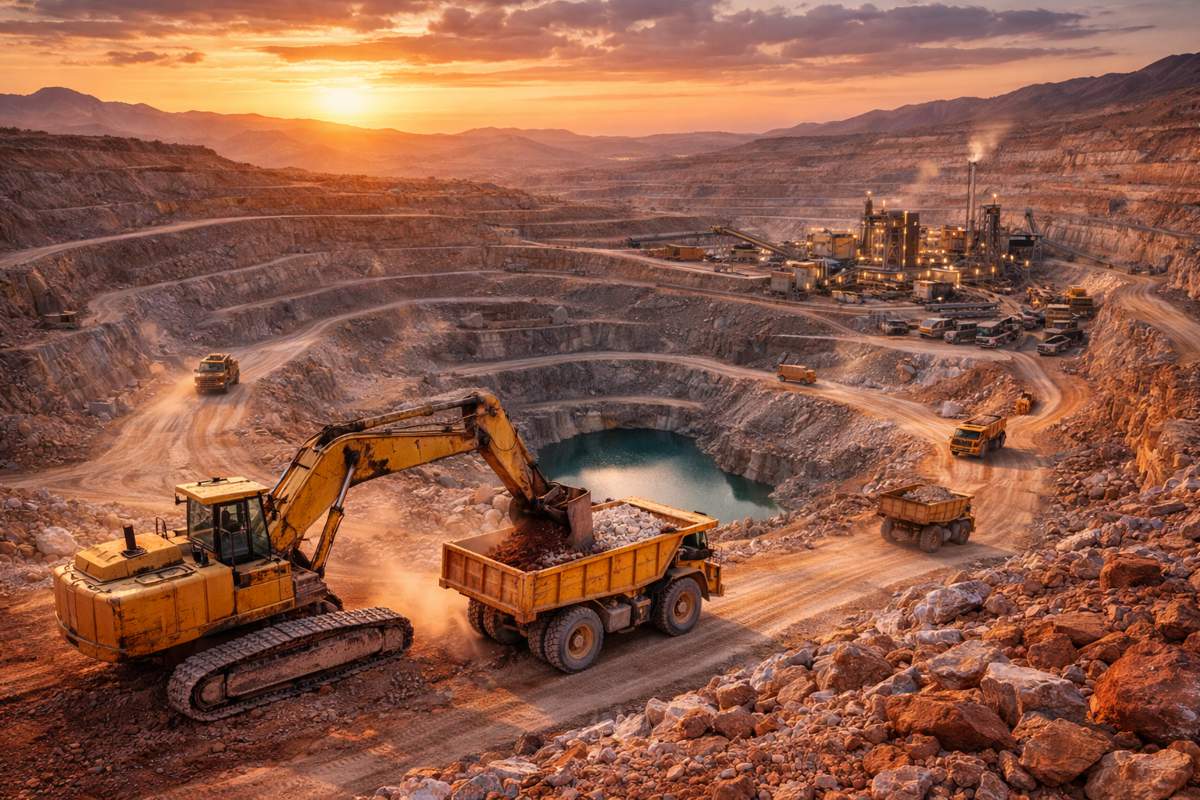
The traditional investment thesis for commodities used to be simple: markets self-correct through price signals. But the ongoing strategic reset has permanently altered the global investment landscape.
Supply chain security has evolved from a basic procurement issue into a core pillar of corporate governance and long-term risk management. Industrial giants now understand that a single material disruption can freeze production lines, delay massive projects, and expose them to political leverage. This harsh reality is driving a massive wave of long-term offtake agreements and aggressive upstream investments.
Mining: A Structural Enabler, Not Just a Cyclical Play
For investors, mining and quarrying are no longer merely cyclical trades. They are the structural foundation of the next industrial era. Projections from the World Bank and IEA consistently highlight that the clean energy transition will trigger explosive, policy-driven demand for minerals like copper, lithium, cobalt, and graphite.
However, this elevated strategic status brings new risks. High-priority industries inevitably attract heavy government intervention, price controls, export restrictions, and sudden regulatory shifts.
The Hidden Value in Bulk Construction Materials
While critical minerals grab the headlines, the bulk materials sector—aggregates, cement, and industrial minerals—offers a deeply overlooked investment angle. These materials are intrinsically linked to long-term domestic infrastructure and housing cycles. As governments ramp up public works and scramble to solve housing shortages, steady demand for these foundational materials is structurally guaranteed, even if it remains vulnerable to strict local environmental regulations.
Government Backing Changes the Calculus
The ultimate shift is that governments are no longer passive observers. Through subsidies, loan guarantees, and direct procurement commitments, public institutions are actively underwriting the domestic production of strategic materials.
Mining is no longer an isolated sector; it is the absolute bedrock of national industrial policy. This permanently changes the risk calculus for investors while locking in unprecedented demand certainty.
The Dangerous Gap Between Infrastructure Vision and Material Reality
One of the most uncomfortable truths in modern policy is that governments frequently announce massive infrastructure programs without securing the material supply chains required to build them. While these mega-projects score quick political points by promising jobs and visible progress, the lack of upstream planning inevitably leads to blown budgets, delayed timelines, and severe cost inflation during delivery.
The core failure lies in treating bulk materials—like aggregates, cement, steel, and critical minerals—as simple inputs that can be sourced later. You cannot instantly expand a quarry’s output. Permitting a new cement plant or bringing a mining project online takes years, sometimes a full decade. Announcing a ten-year road and housing initiative implicitly demands a parallel ten-year expansion in quarrying and logistics, yet this critical alignment almost never happens.
The Burden of Double Demand
This supply strain is intensifying globally as nations attempt to modernize aging infrastructure while simultaneously building new, low-carbon energy grids and climate resilience projects (like coastal defenses). This creates an unprecedented “double demand” for physical materials.
Mining and quarrying have been thrust back into the strategic spotlight precisely because they can no longer be taken for granted. The consequences of ignoring these foundational sectors are now painfully visible through project delivery failures and political disputes. Ultimately, an infrastructure strategy without a materials strategy is destined to fail. For contractors and investors, the most critical question is no longer just what is being planned, but whether the raw materials actually exist to support it.
China, Processing Power, and the Reality of Global Dependency
When discussing strategic minerals, the biggest bottleneck is often overlooked: processing capacity.
The global economy depends not only on where minerals are extracted from the ground, but where they are refined and converted into industrial inputs. Even if you diversify raw material extraction across the globe, monopolization at the processing stage is enough to maintain geopolitical dependency.
Historically, the refining capacity for critical minerals like rare earth elements, graphite, and battery materials has been heavily clustered in a very small number of countries (largely China). Europe and North America now view this concentration as an unacceptable strategic vulnerability. The EU’s Critical Raw Materials (CRM) Act is a direct response to this reality: merely extracting minerals does not provide industrial security; you must also secure the “processing” stage, which is the most profitable part of the value chain.
What Does This Mean for Construction and Investors?
This bottleneck in processing capacity directly threatens the technological transformation of the construction sector. As the shift toward electric heavy machinery, digital jobsite technologies, and fully automated plants accelerates, dependency on processed mineral supply chains will increase exponentially.
For investors, the real added value and strategic leverage lie not in the mine itself, but in the processing facilities. Governments looking to pull material security within their own borders will offer massive incentives for processing investments while simultaneously tightening regulatory oversight.
Of course, this strategic awakening does not mean every country will open massive mines on its own soil. Some nations will diversify their supply chains through international strategic partnerships and long-term contracts, while others will focus on recycling and substitute materials. We are not looking at a single playbook, but rather a global strategy revolution shaped by local tactics.

Leave a Reply