
Electric Excavators Defy Harsh Quarry Conditions
Electrification in the construction and mining sectors is no longer limited to indoor spaces or urban projects. Characterized by dust, intense vibration, and brutal working conditions, quarries and crushing plants have become the ultimate testing ground for battery-powered heavy machinery.
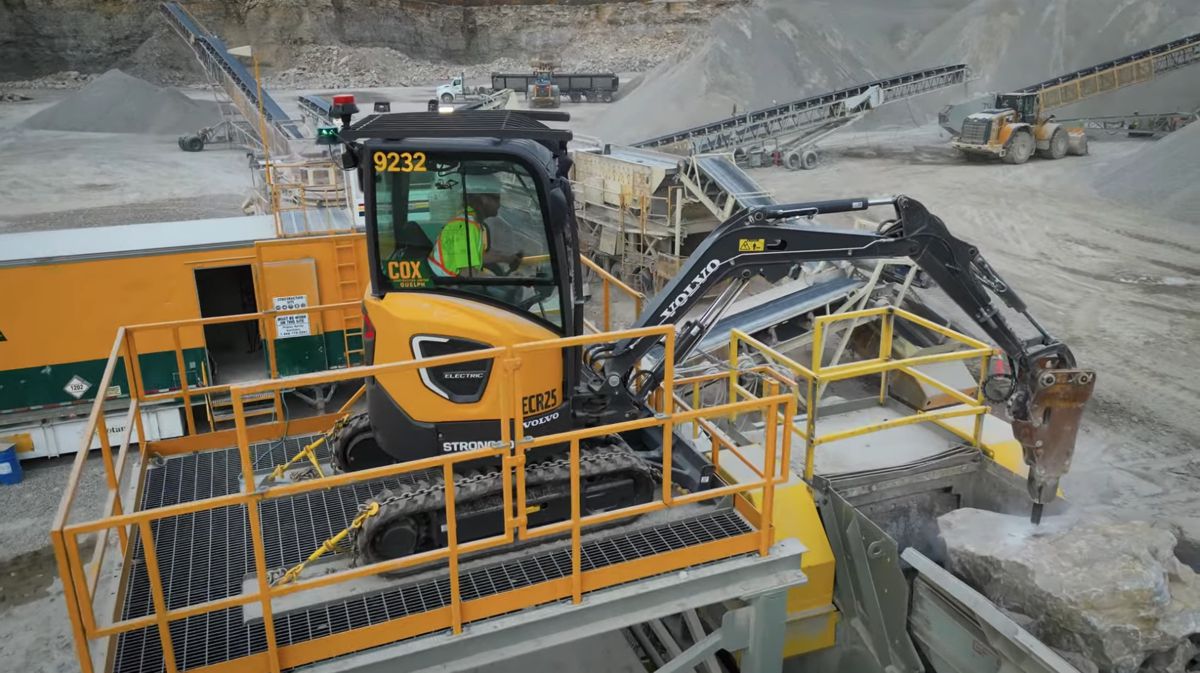
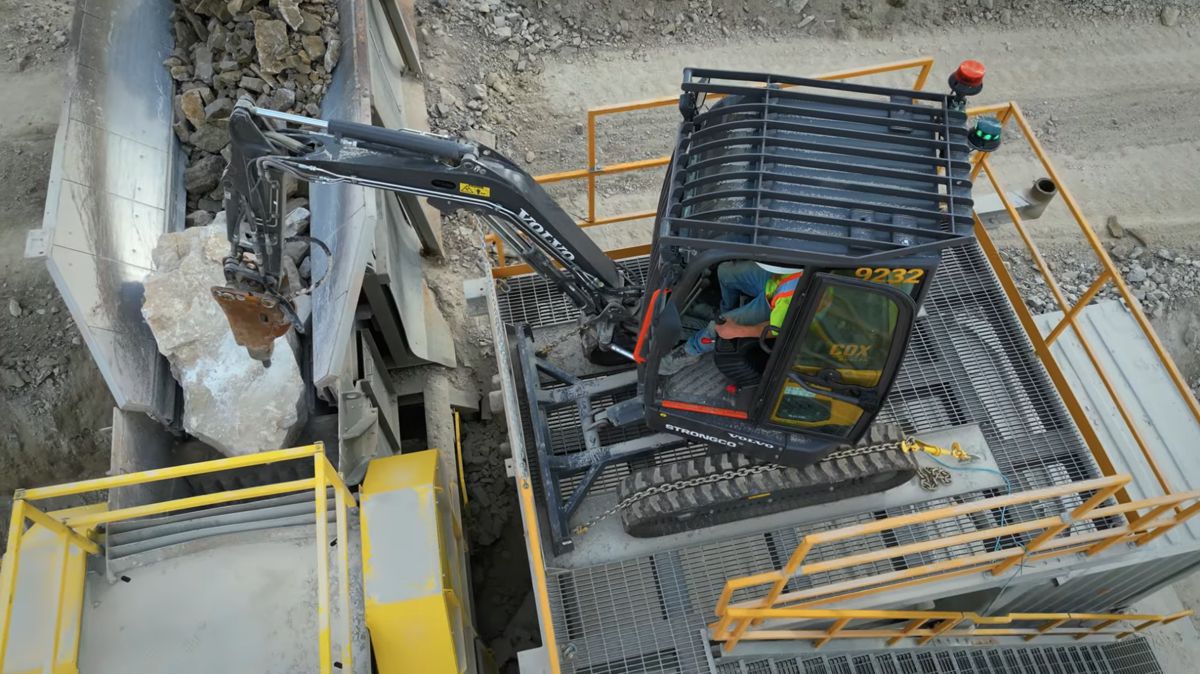
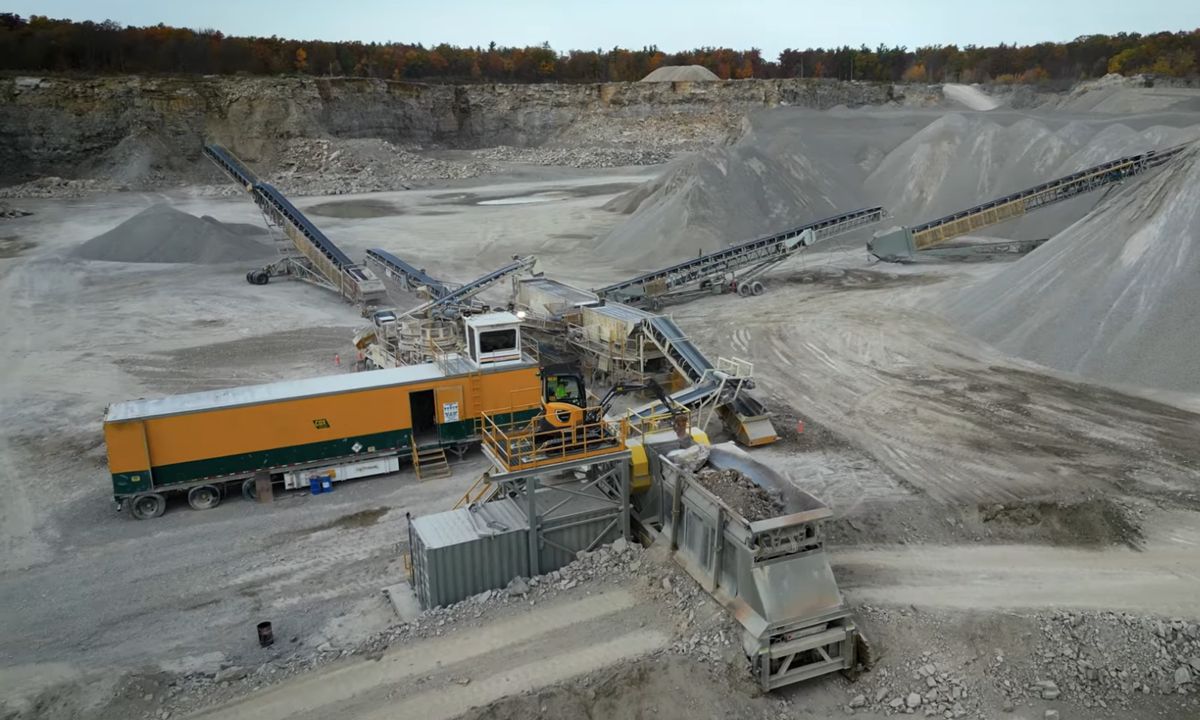
Cox Construction, a well-established infrastructure company based in Canada, is breaking the mold by positioning compact electric excavators directly on top of crushing plants. This isn’t a temporary trial; it’s an active, permanent production solution that successfully combines cost control, fleet efficiency, and low-emission goals.
Why Was “Oversize Rock Breaking” Chosen for the Test?
Breaking down massive rocks that don’t fit into the crusher feed requires continuous hydraulic power but is performed intermittently. With traditional diesel machines, this leads to long idle times and unnecessary engine wear. To eliminate this operational waste, Cox Construction placed 2.5-ton Volvo ECR25 Electric excavators directly atop their crushing plants.
Critical Advantages of Switching from Diesel to Electric:
-
Instant Operation & Zero Idling: The electric motor requires no warm-up time, consuming power only when actively operating, thus preventing energy waste.
-
Lower Maintenance Costs: Without an internal combustion engine, routine headaches like engine oil changes, filter replacements, and fuel logistics have been completely eliminated. The maintenance focus has shifted solely to the hydraulic systems.
-
Extra Resistance to Vibration: Electric drivetrains contain significantly fewer moving parts than diesel engines, minimizing the risk of breakdowns and wear caused by the constant vibration of the crushing plant.
-
Noise-Free Operation: Eliminating engine noise has drastically improved communication among workers around the facility, enhancing both workplace safety and comfort.
Charging Infrastructure is Much More Practical Than Expected
The biggest prejudice against electric equipment in heavy industry is charging logistics. However, Cox Construction effortlessly solved this by integrating the crushing plant’s existing 600-volt high-voltage system directly for charging. Because the machines operate only when needed, a single full charge has proven to last up to two weeks under specific conditions.
A Strategic Investment for the Future
The results achieved by Cox Construction prove that sustainability is not just a future promise, but a practical reality that can improve efficiency on active job sites today.

Leave a Reply