
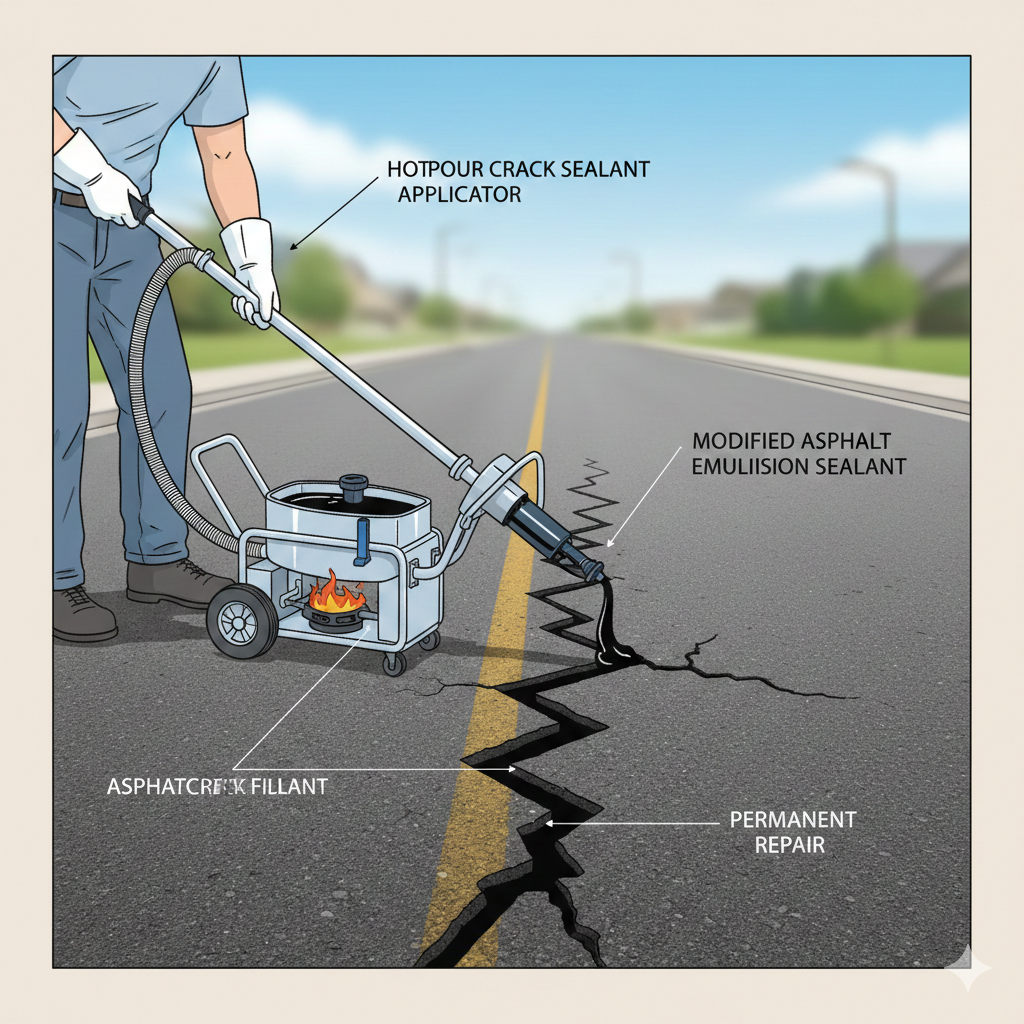
When a highway or commercial driveway splits open, you need a heavy-duty solution that actually sticks. So, what do you use to fill cracks asphalt? The undisputed champion of the construction yard is bitumen. It is highly flexible, completely waterproof, and handles crazy weather shifts—whether you are dealing with the scorching heat of the UAE or the tropical humidity of the Philippines.
Contents
What Is Bitumen Crack Filler Used For?
At its core, it acts as an industrial-strength band-aid, stopping water from penetrating and destroying the base layer of your road. bitumen bridges the gap, expands with the pavement, and prevents a tiny split from turning into a massive, tire-destroying pothole.
Here is a quick look at the pros and cons before you load up your shipping containers:
- Advantage: Highly flexible, meaning it expands and contracts with the road without snapping.
- Advantage: Extremely cost-effective for massive infrastructural projects and bulk exports.
- Disadvantage: Can become slightly sticky in extreme, melting heat if not mixed with the right polymers.
- Disadvantage: Demands a perfectly clean and dry surface before application to ensure a strong bond.
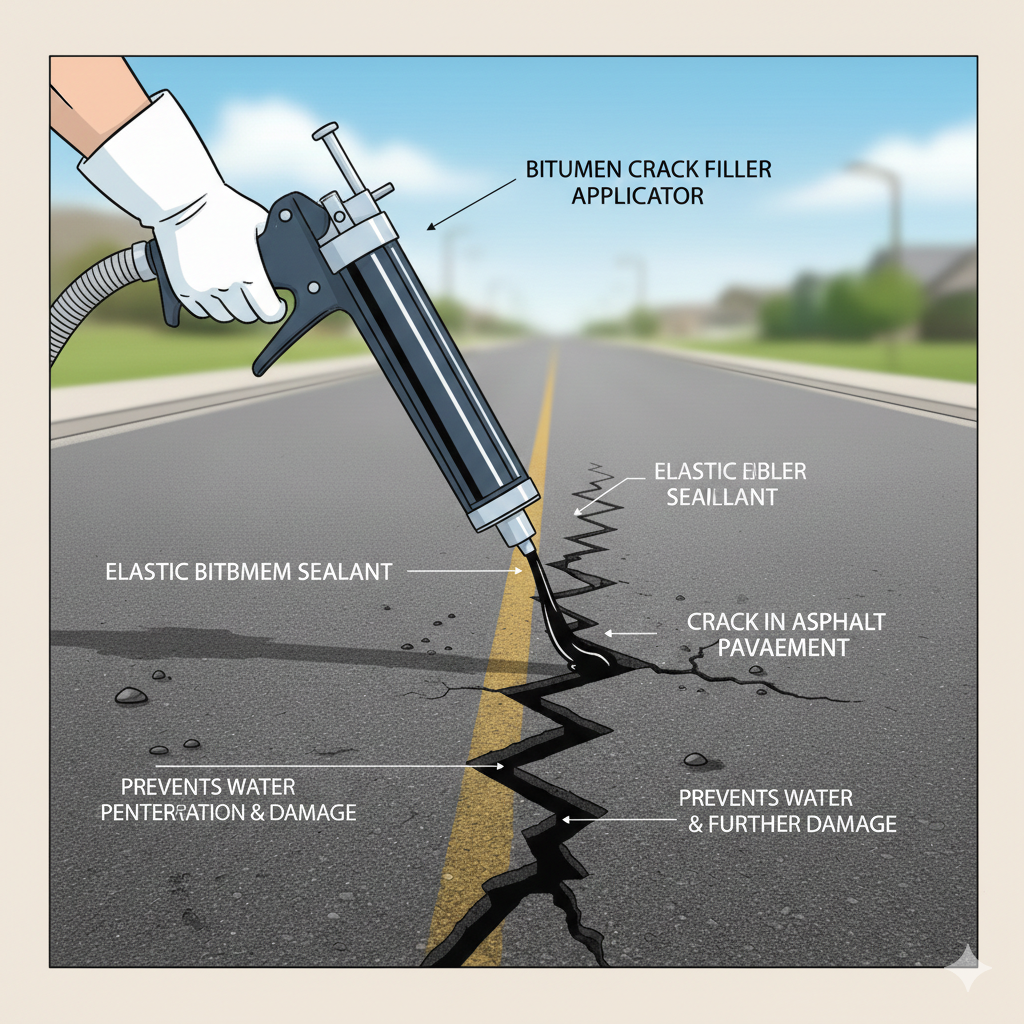
What Is Bitumen Crack Filler Price?
Prices fluctuate based on global crude oil markets, but generally, buying bitumen in bulk is incredibly economical. If you are exporting tons of material to growing infrastructure hubs like Congo, Ethiopia, or Peru, the cost per ton makes it the smartest financial choice.
Here is a quick comparison against the alternatives:
| Material Type | Average Cost | Durability | Flexibility |
| Hot Pour bitumen | Low | High | Excellent |
| Cold Pour Epoxies | High | Medium | Poor |
| Concrete Patch | Very Low | Low | None (Cracks easily) |
How To Apply Bitumen Crack Filler?
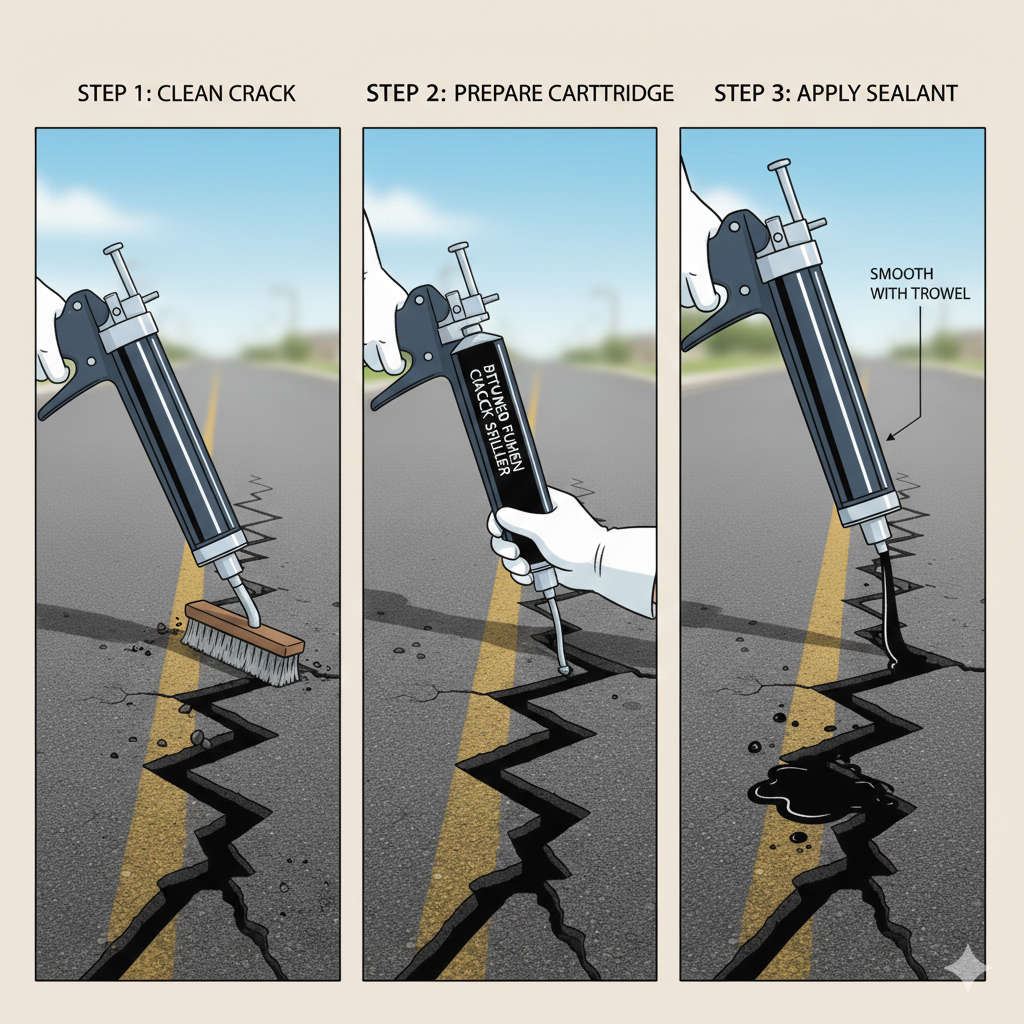
Don’t overcomplicate the process. First, blow all the dirt, rocks, and vegetation out of the gap using compressed air or a stiff wire broom. You want a bone-dry, spotless trench. Next, heat up your bitumen block in a melter and pour the hot liquid directly into the void. Use a V-shaped rubber squeegee to level the liquid flush with the pavement. Let it cure, and you are ready to let the heavy transport trucks roll over it again.
Frequently Asked Questions About What Is Bitumen Crack Filler Used For
How Long Does Asphalt Crack Filler Last?
A properly applied hot-pour bitumen job can easily last 3 to 4 years, depending on traffic volume and extreme weather conditions.
Can You Fill Asphalt Cracks With Sand?
Technically yes, but you shouldn’t. Sand won’t stop water from washing away the road base. It is a temporary fix, not a structural one.
What Is The Best Way To Repair Cracks In Asphalt?
Cleaning the area thoroughly down to the base and applying a hot-applied bitumen sealant is hands down the golden standard in the commercial construction industry.
Can You Put New Asphalt Over Old Cracked Asphalt?
You can, but it is a bad idea. Those old structural flaws will eventually reflect right through your shiny new layer. Always seal and repair the base first!
What Do Professionals Use To Seal An Asphalt Driveway?
The pros almost exclusively rely on commercial-grade bitumen emulsions or specialized coal tar mixtures because they offer the absolute best durability and waterproofing.

Leave a Reply